


Share this article
Imagine sitting at a poker table: you glance at your cards and your stomach drops. The other players look confident. The chips in front of them are stacked higher than yours and you start to wonder if you should fold. But someone leans over your shoulder and says: actually, your hand is better than you think – you just don’t know how to play it yet. That, in short, is the argument Mesfin James, VP of Regulatory Affairs at TFS HealthScience, made about Europe’s clinical trials industry at the OCT Europe conference recently.
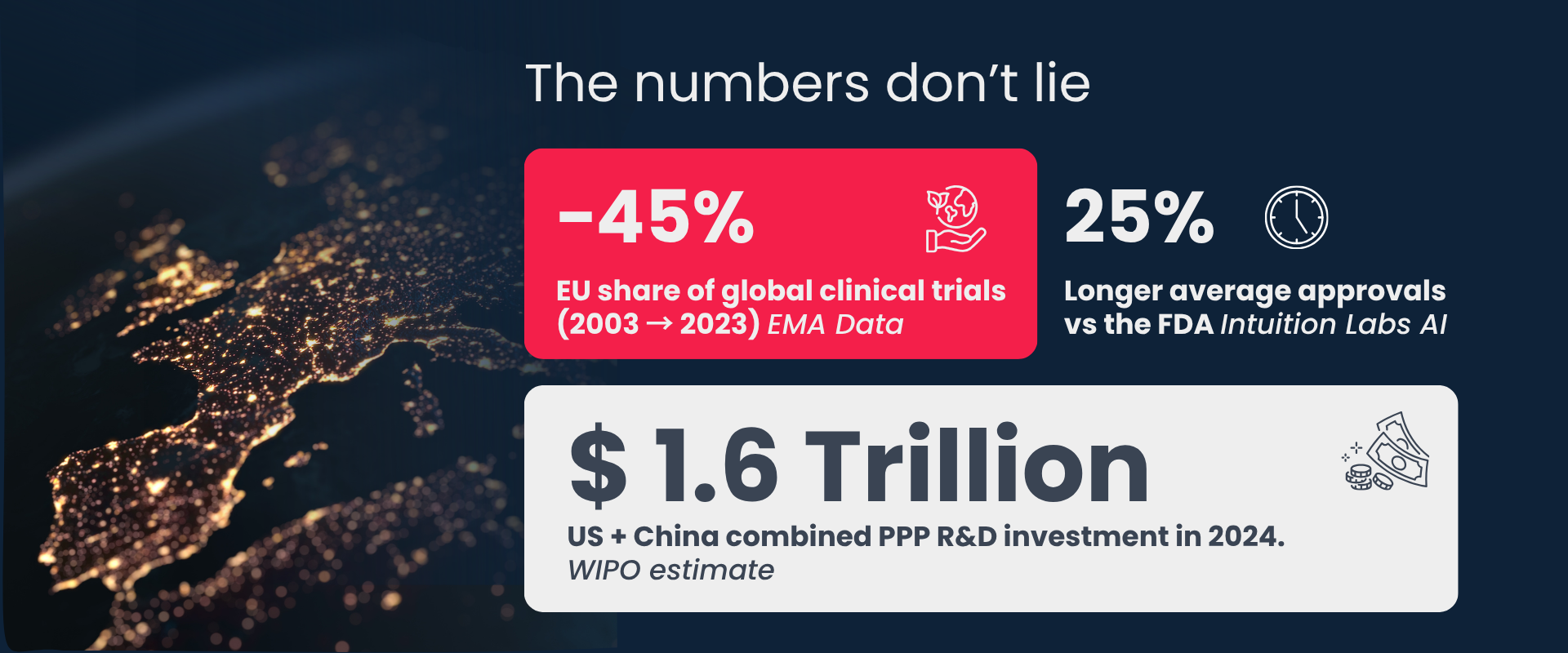
On the face of it, the cards do look bad: estimates suggest that between 2013 and 2023, the EU’s share of clinical trials run worldwide fell by 45%. Getting a new drug approved may take roughly 25% longer than it does through the US Food and Drug Administration, the FDA. And last year alone, the US and China together poured an estimated $1.6 trillion into research and development, according to public industry data. Europe was nowhere near that figure.
So why does Mesfin think Europe is still in the game? Because the cards are there if Europe knows how to play them.

A single door, after years of separate ones
For a long time, running a clinical trial across Europe was a slog. Every country wanted its own paperwork, in its own format, on its own timeline. Sponsors filed in Germany, then France, then Spain, then waited.
Then came the Clinical Trials Regulation, or CTR, which now governs every trial across the EU. With it came a single online system called the Clinical Trials Information System (CTIS) that covers the entire European Economic Area. One submission, one process, 27 countries.
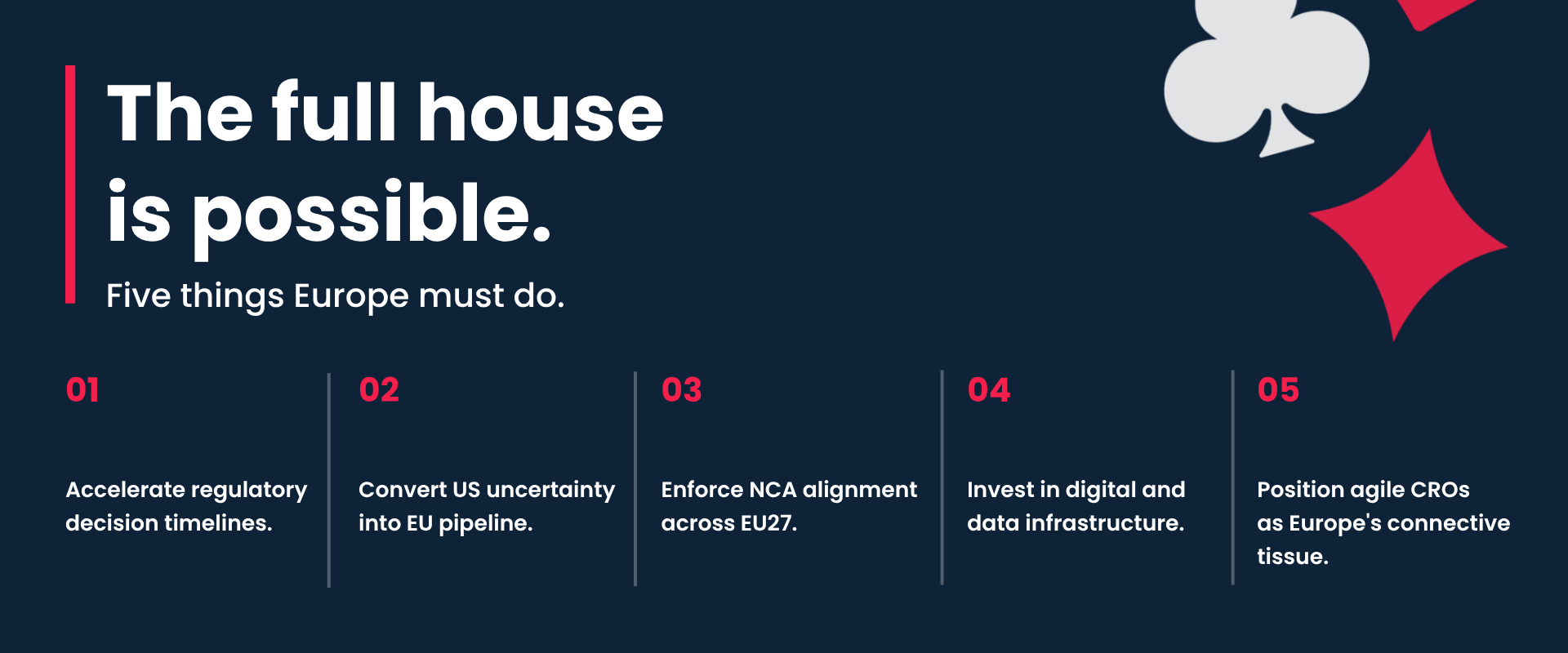
On paper, it is a strong hand. In practice, the deal has been slower than promised. The system works, but the national regulators behind it still move at different speeds and still ask for different things. Lining them up properly is the most important job left to do, and the one most likely to decide whether sponsors stick with Europe or look elsewhere.
The other players have changed too
The bigger shift, though, has come from across the Atlantic: since 2024, many sponsors have perceived the United States as a less predictable environment for clinical research, particularly in light of changes in funding priorities and policy signals. At the same time, policy has been harder to read. Designing a study around US patients alone has started to feel like a risk rather than a default.
Pharmaceutical and biotech companies have noticed and they are asking a question they were not really asking three years ago: where else could we run this? Europe is the obvious answer:
- Around 450 million people across 27 countries means deep and varied patient groups.
- Costs are competitive.
- And, for the first time in years, sponsors can file once and run everywhere.
The chips are still in play
Here is the catch: decisions about where to run trials over the next five to ten years are being made now. If Europe’s regulators align and CTIS delivers what it was designed to deliver, those decisions will tilt towards the EU. If alignment stalls, sponsors will quietly take their chips somewhere else, and they will not be back in a hurry.
The full house is possible
Europe is holding a strong hand it has not yet learned to play. The cards are good. The next 18 months may play a decisive role whether the EU pushes them forward and wins or sits on them until the table moves on.
If you are shaping EU regulatory strategy, designing multi-country clinical trials or deciding where to place your next program, our Regulatory Affairs team is available to discuss general regulatory considerations relevant to your development strategy.
Regulatory clarity starts here
Contact us to secure the oversight, documentation and compliance your study demands.Let’s talk