
Share this article
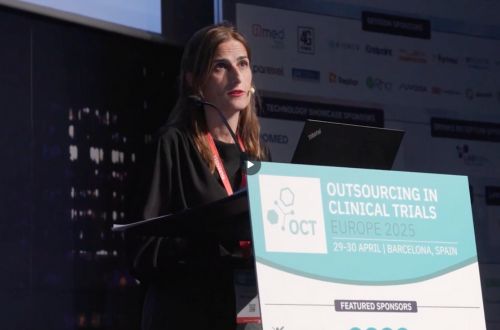
Explore a bold new vision for clinical trial success with Ara Vinuesa, Senior Director of Project Management at TFS. In this presentation from OCT Europe 2025, Ara draws from over 15 years of experience across global studies to offer strategic insights on how sponsors and CROs can overcome persistent operational challenges—like high turnover, budget overruns, and communication gaps—and move toward smarter, more agile models for trial execution.Good afternoon everyone, and thank you for joining me for this presentation where we’ll discuss how we can rethink clinical operations to achieve faster and smarter paths to clinical trial excellence. So a bit about me. My name is Ara Vinuesa, I’m located in Barcelona. I am biologist and biochemistry by education, and currently I’m working as a senior director of project management at TFS where I started working in 2008. So it has been a long journey for me there. I started my career as a CRA and then I was promoted to the different roles within the clinical operations, CRM, PM, PD, and finally DPM. And really looking back, I think all this has brought me a lot of knowledge on the various activities we develop in clinical operations and also how these roles and activities have changed over the years.
So during all this time I have been working in study phases from phase one to phase four, including real world evidence and in many therapeutic areas and indications such as oncology, dermatology, ophthalmology, autoimmune and autoinflammatory diseases. But in the last few years, I have been very focused on neuroscience, internal medicine, especially respiratory and infectious disease and also on rare diseases. As mentioned, today we’ll be talking about what we can do, how we can rethink the way we are doing the trials today. And I will be covering the following topics. I would like to start with the brief evolution of the CRO sponsor model to go there to the key challenges that we are facing with this traditional model. Then we will be proposing a new results-driving framework for smarter operations. I will like also to visit, which are the future trends for all of us, and finish with a summary and key takeaways.
Starting off, let’s quickly review the story of the CRO sponsor model relationship to better understand how it has grown and changed over the time. And we’re going to start with a very simple question and it’s what is a CRO in simple terms, a contract research organization? I know, I mean I’m sure you all know it’s just an organization that helps carry out and support with the clinical research to pharmaceutical, biotech and medical device companies. And this is the basis for this relations CRO sponsor. But the model is not new. And in fact it goes back to the forties and the fifties in the United States with early companies like Huntington Life Science and Charles River Laboratory that we’re starting or building the foundations of what we know now the industry we know today. Over the years this relationship CRO sponsor relationship has undergone significant changes.
At first it was just a straightforward client-vendor relationship, mainly focused on reducing fixed at lower costs. But over the time it has grown into something far more sophisticated. And in fact the CROs have increased their expertise and services and also support sponsors in many part of clinical trials or even in all the aspects. We have what we call the full service CROs, like for example TFS. And this has led to a shift to acquire a more stronger and strategic partnership. So today basically the CROs are key partners for pharmaceutical and biotech companies offering their expertise in each therapeutic areas, regulatory affairs, data science, advanced technologies, and many other aspects. And then just to give you an idea on how important this has become, by 2023, almost half of the money is spent by sponsors on clinical trials was going to CRO services showing how critical these partnerships are for improving the clinical operations and research efficiency.
But however, even with all the progress and benefits, these partnerships also come with some challenges. And let’s now take a look at some of the main challenges that we are facing with the model we’re operating today. So as we look at the current situation of the CRO sponsor relationship in today’s clinical industry, the data shows some trends from, for example, based on by both Avoca groups and Vantage partners found a dissatisfaction in these partnerships. Both the studies show that a third of sponsor companies felt that these outsourcing partners were not performing as expected and that these relationships did not bring the costs or time savings that they were hoping for. And there are many possible problems that can cause delays and make running a trial more expensive. But today we will focus on four of these key challenges that we are facing under the traditional outsourcing model.
Let’s examine the first big challenge that is the budget concerns and poor protocol pain. And to understand the impact of these, it’s important to know that clinical trials use up around 40% of the pharmaceutical companies budgets and that’s about $7 billion in the US alone. One big concern is how often the protocols need to be changed. And we found in a resident study from TAPS that 76% of phase one four trials now need amendments compared to 57% in 2015. So as you can guess, each of these changes costs a lot of money. It can be between $141,000 to $535,000. It’ll depend on the complexity of the trial and the amendment. But there are also some good news and it’s that about a quarter of these amendments could be avoided if it was a better planning when writing the protocol at the beginning of the study, saving a sponsor’s time and money.
So our second big challenge is related to change orders that are basically formal agreements to change the trial scope, cost or timelines once the project has started. And this is also linked with the first challenge we were talking about. While some change orders can be normal because of the complexity of the clinical trials and there are things that we cannot maybe anticipate, there is still a major problem for sponsors and the traditional outsourcing model, if there isn’t good planning before the trial begins, change orders can cause expensive delays and waste resources. One common reason for this, for facing this issue is rushing at the beginning of the project to start as quick as possible many times related because there are some milestones that must be achieved without thinking about the possible problems or setting realistic timelines. And this causes a chain reaction because rushed timelines cause confusion and mistakes, and then at the end more change orders. And then also many sponsors sometimes do not plan appropriately for the extra cost of change orders when planning their original budgets. And this leads to cost and more operational problems also.
So the third challenge is something that many of us know very, very well and it’s the highest of turnover. A 2020 study by B-D-O-U-S-A found a 21% turnover among CRAs. And this is concerning considering that the CRAs are key monitoring clinical trial conduct and quality at site level to make sure that a project is running properly. When trial staff keep changing, it causes many problems. The trial management becomes inconsistent and every time a new person joins, there are some gaps in the knowledge. It’s important to remember that when we are losing an experienced member, we are not just losing their skills, we are also losing their knowledge, we are losing their connections with the sites and also the specifics of the trials that they know very well. So this high turnover at the end increased the changes of protocol deviations, of data mistakes, study delays, and this potentially is making sponsors lose even more time and money in this traditional outsourcing model.
And the fourth challenge, it’s very important because it’s connected to many other problems sponsors face during a trial and it’s the communication and transparency gaps in today’s digital world. We may think that sharing information is not a big deal, but unfortunately it’s not the case. One of the big reasons for having these problem seems to be the use of disparate tools between CROs and sponsors. But another problem is also sometimes that the sponsors have little or no access even to key information systems. And the document sharing is not well managed. At first this might seem like a small problem, but they are not because this is actually blocking the sponsors from making fast and informed decisions. And yes, this can have a real impact also on the patient outcomes.
When we look at the combined effect of these four main challenges, the numbers are quite striking. Long study startup timelines together with the recruitment challenges are the biggest reasons why up to 85% of trials face delays. A 2023 study by TAFs showed that the approximate daily cost of running phase two and three trials is around $40,000. So even short delays can cost sponsors 10s of thousands of dollars in lost opportunities. We also see, it’s just not about money because we also see problems with data quality, decisions made slower than needed and at the end this is also having impacts on the patient outcomes. These challenges are not operational problems for the CRO sponsor model. They are real obstacles to scientific progress and better care for patients. And this leads us to the most important question. That is how we can tackle these issues in strategies that make clinical operations more efficient and cost effective.
So even after 20 years of using outsourcing models, the performance in drug development has not improved as much as we would have hoped. And this is why we suggest to focus on three key strategies to build smarter and faster efficient clinical operations. The first is essential to set up a shared governance model structure. And this is not just having regular meetings with a sponsor, it’s about building a very clear decision-making system in which both CRO and the sponsor have very, very clear which are the roles and responsibilities because with better coordination and clear authority, many of the communication problems we have been talking about could be avoided.
And second, we need to carefully track performance in our experience using real-time dashboards and standardized processes to manage changes, how to avoid delays and miscommunications because it’s improved the way information is shared and visualized by everybody that is involved in a trial. Setting up clear steps for escalating problems, also make it easier to solve issues quickly before they cause bigger delays. And I think it’s a must for all of us to really have a risk-based management mindset when we are working in clinical trials. And finally, we also recommend to use integrated technology platforms. This helps sponsors and CROs share instantly on automatic reports that support faster and informed decisions. And this is especially important in neurological trials where we rely on especially specialized tools for cognitive testing and patient monitoring. So in this slide I would like to focus a bit more on these neurological conditions to give a more specific example where we have identified four important areas that can be customized.
First for better disease assessment, we always recommend using IPRO solutions to collect real time cognitive data and digital versions of well known scales. That can be for example U-P-D-R-S, but it’ll depend on the indication, but it’ll be also very important to find a balance on the number of scales we use in a clinical trial. Second, to improve the data collection, sponsors can use wearables apps to track patients daily activities remotely. Third, the patient engagement. This is key, especially in rare neurological diseases and setting up customized reminder system and interactive patient diaries with real time tracking of compliance can help patients to stay involved and stick to the trial plan. And it’s also very, very, very important that we take into account the status of the patient when we design the protocol. We must always keep in mind that for example, these patients with neurological conditions may suffer from fatigue.
So if the protocol is too demanding or tiring, we risk to lose these patients during their participation. Flexibility should be always a priority to the, I mean we need to put first the patient needs to make sure they can complete the trial without feeling overwhelmed. And finally, to better support the sites sponsor and CRO should consider the use of centralized online training platforms including a special training in this case for neurological assessments. At TFS we put a strong focus on data quality specifically in neurological studies where patient questionnaires are very frequently the key endpoint to ensure that the results are reliable. And for example, in our case we have some qualified psychometrics that are ensuring that a standardized training is given to everybody involved at site level at the CRO level to ensure the consistency and minimize the variability. And then also it’s really important at the standardization. So the use of automatic scoring systems with error detection helps also to ensure accurate and efficient data collection.
So we can use markers to make sure the strategies that we are implementing are working well. For example, when sponsors and CROs agree early on the goals of the trial and when the communication is open and clear, it becomes much easier to solve any problem as the trials move forward. And when this framework is applied, correlate brings several benefits. We have seen a sponsor reduce the complexity of their operations, manage the risk better and also have the trials finishing faster. Most importantly, these improvements at the end lead to better results for patients. So looking ahead, we have also some exciting new trends that will continue to change the way we run clinical trials and let’s see some of them. So as we look at the future of the clinical operations, there are three big trends that are changing the way we are currently running the clinical trials.
First, we are seeing a lot of progress with the artificial intelligence and advanced data analysis. And thanks to these tools, trials are becoming more personalized with flexible designs that can be adapted as they move forward. They’re also helping to make data management much faster and more efficient. The second trend is the move to remote, hybrid and decentralized clinical trials. This is happening at least partially because of these tools we are talking about. We have now the wearable devices, the mobile apps that allow real time data collection. Even the organizations like the FDA are working on new guidelines to help support how we can manage these new clinical trials. And also probably you are aware that the ICH six guidelines in their last update in the annex two is putting in the focus that is centralized elements in a clinical trial. And the third trend is the focus on the real time data integration.
We are seeing now new share platforms that helps teams make faster decisions along with mobile health tools that make it easier to monitor patients remotely and collect data in real time. We have been talking about the neurological diseases for example, and there is something very, very simple in these trials. It’s very important that every patient is always assessed by the same, rater across the study. And this was something that well switch on raters is happening and with the traditional model we only find this when the CRA goes to the site and it can be very late. But today we can track this by recording the rater initials and setting A QRI for rater changes. So we can easily detect when an unexpected switch in the rater is happening and then we can address this we the site to ensure it is prevented from happening again. So at the end, all these trends are helping to make clinical trials faster, more flexible and more focused on patients and bringing better treatments to people sooner as we move forward. Embracing a patient-centric approach will be key to shaping the future of clinical research.
So what this means for sponsors and CROs, the growing use of the AI brings important improvements such as large scale data analysis, better patient recruitment strategies using digital tools and more automatic processes to manage trials. Second, with the move toward remote and hybrid trials sponsors and CROs must keep adapting by building strong digital platforms and virtual management systems to support these new ways of running trials. And finally, this real data integration will push the industry towards more standardized ways to collect information and better connected platforms. So at the end this will help communications are more transparent and decision-making faster. And yeah, it’s important to understand that these challenge are not just about technology, they represent a major shift in how we are running the clinical trials, how we are designing. And this is helping to create a future that is more efficient based on better data and focus on the needs of the patients.
So to finish, let’s quickly go over the main points from today’s presentation. We have seen that the CRO- sponsor relationship have evolved from simple vendor agreements to real partnerships, but this current outsourcing model is still facing some important challenges like the budget problems, too many change orders, high staff turnover and ongoing communication issues. To solve these problems, sponsors and CROs should move toward a new tailored results driving model for smarter and faster clinical operations. This model is based on three main pillars that are creating joint governance structures, tracking operational performance in real time and using unified technology platforms. So when this is done well, these changes reduce the complexity, improve the risk management and helps trials finish faster with better outcomes for the patients. So finally, looking ahead, the clinical trial industry will continue to change as technology advances and we’ll see this for sure and the main message to remember is that even though today’s outsourcing model is not perfect and is still creating some delays, we can overcome them by using more integrated technology-focused approach that improve efficiencies and stay focused on the patient, having the patient in the center.
So thank you all for your attention and I will be happy now to take any questions you may have.
First of all, Ara, thank you so much for your presentation. I definitely agree that the clinical research is evolving and I just wanted to ask from your experience in which countries the integration process is faster and move smoothly. Thank you.
You mean related with the real data?
Yeah, absolutely.
I mean I would say maybe US it’s a bit faster also because they have ways, for example, to do some remote monitoring in Europe it’s more challenging and I am really wanting to see how this approach in the ECJ guidelines and how we can move forward. This one for example, right now it’s not allow it this remote source data for example, but in general this can be applied and we are doing this. I mean when we have trials across different countries, we are applying the same systems in all the countries and all these processes we have been talking about. So yeah, possible. Thank you so much.